How to tell if the reading help is actually working, without waiting another school year.
If your child has dyslexia this will tell you why guessing fails them, what actually works, and the questions to ask your school.
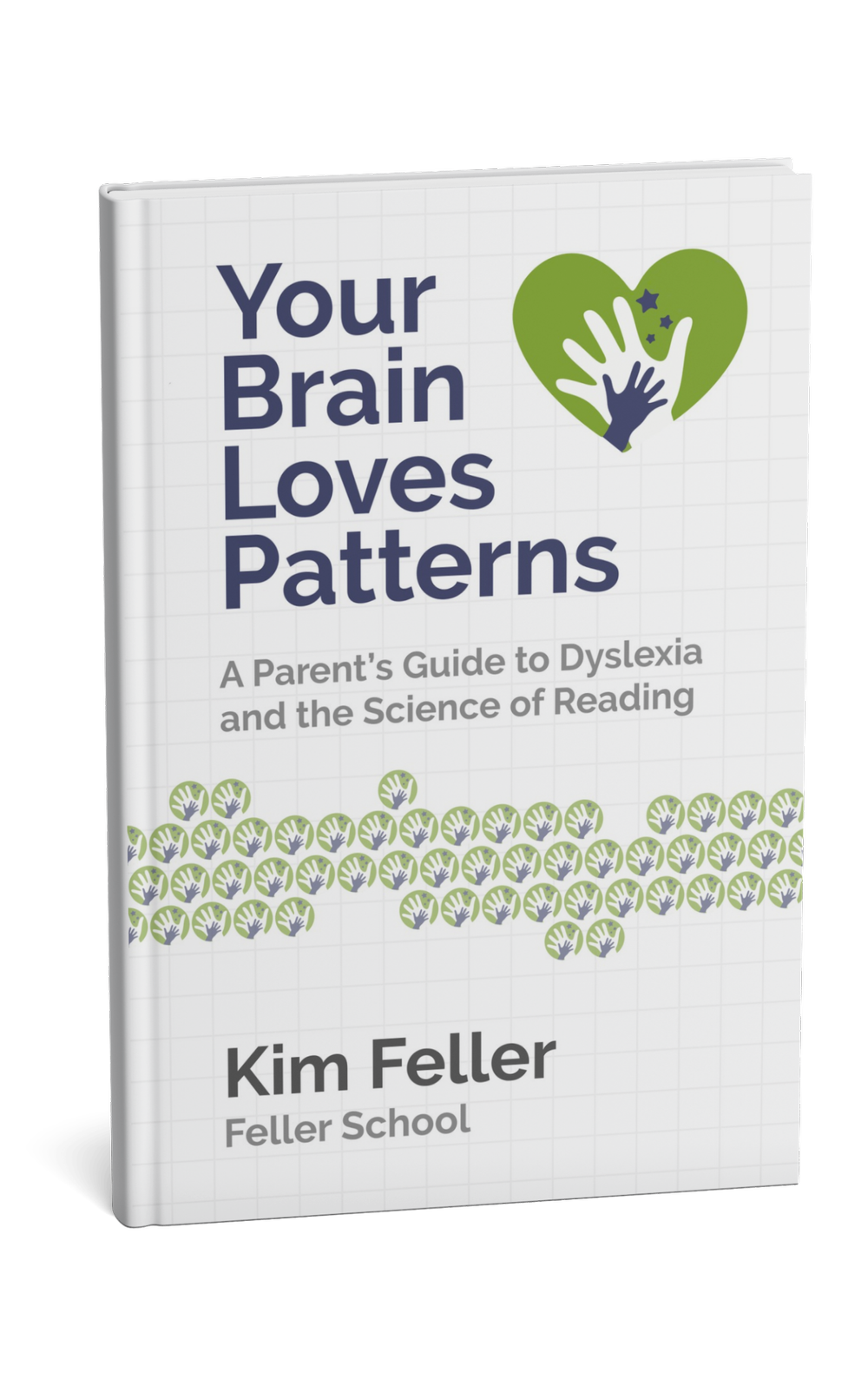
Dyslexia explains why your child struggles. It doesn't change how they're taught.
You fought to be heard. You got the evaluation. Finally there was a name for it, and a reason.
So your child got help. An IEP. A reading specialist. Thirty minutes of pull-out intervention.
A year with an IEP and your child is making very little progress. Standardized scores continue to be below grade level.
More help has not worked. This is not because your child stopped trying, and it is not because you did not push hard enough.
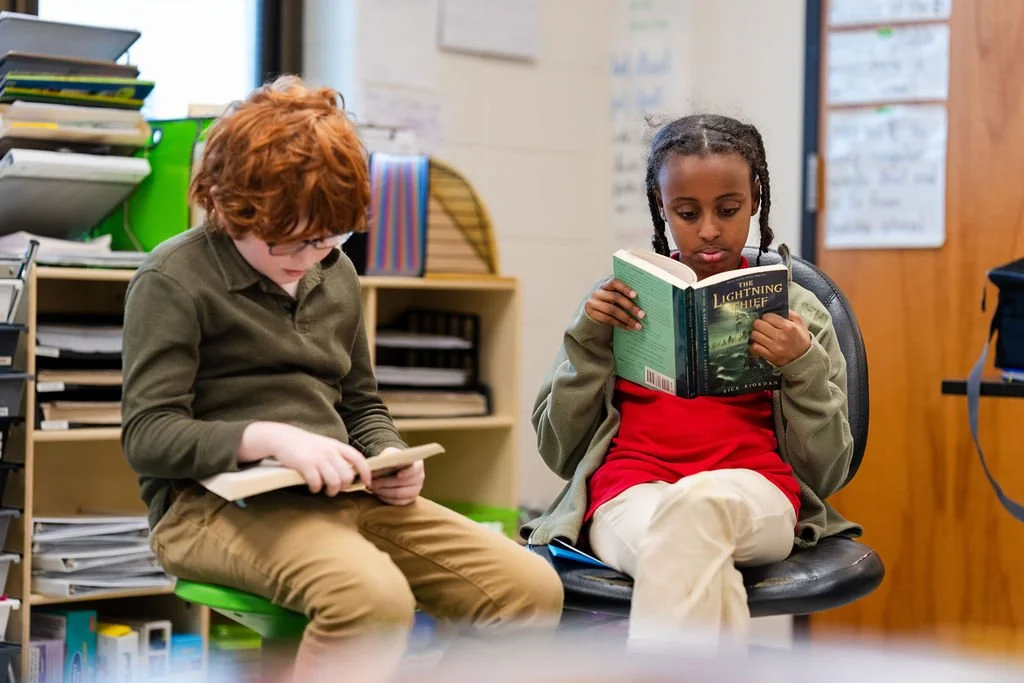
In 2013, the year Mississippi passed its literacy law, Wisconsin fourth graders were twelve points ahead of Mississippi. In 2024, Mississippi's growth has astounded the nation while Wisconsin scores continue to decline.
So what did Mississippi change?
They stopped teaching children to guess.
In 2013, Mississippi passed a literacy law grounded in the science of reading, sent reading coaches into schools to retrain teachers, and held every school accountable for every student's reading progress. Teachers stopped prompting children to guess a word from the picture and the sentence, and started teaching them to decode.
This change in Mississippi education was important for all their students, but critical for their students with dyslexia. Wisconsin students and teachers need this kind of education reform, too. Your child deserves better instruction.
Kim Feller was trained to teach reading the way most teachers around the country still teach today. For decades she taught her students to memorize whole words and to guess at unknown words. She was taught to prompt them:
Sounding the word out was the last resort. Guessing at words can mask real reading until third grade, when the pictures disappear.
- Guess the word from the picture
- Memorize they as a shape
- Sound it out only as a last resort
- Books with predictable patterns that give the answer away
- 170,000 words to memorize
- Decode the letters in front of them
- Learn why ey says /ā/
- Sound it out first, every time
- Books that can be decoded
- 75 phonograms and 31 rules
What happens at home when the instruction at school finally fits?
That is the whole code. Learn it and 98% of English becomes predictable, so a word your child has never seen before is still something they can work out alone. Not more practice. A different method.
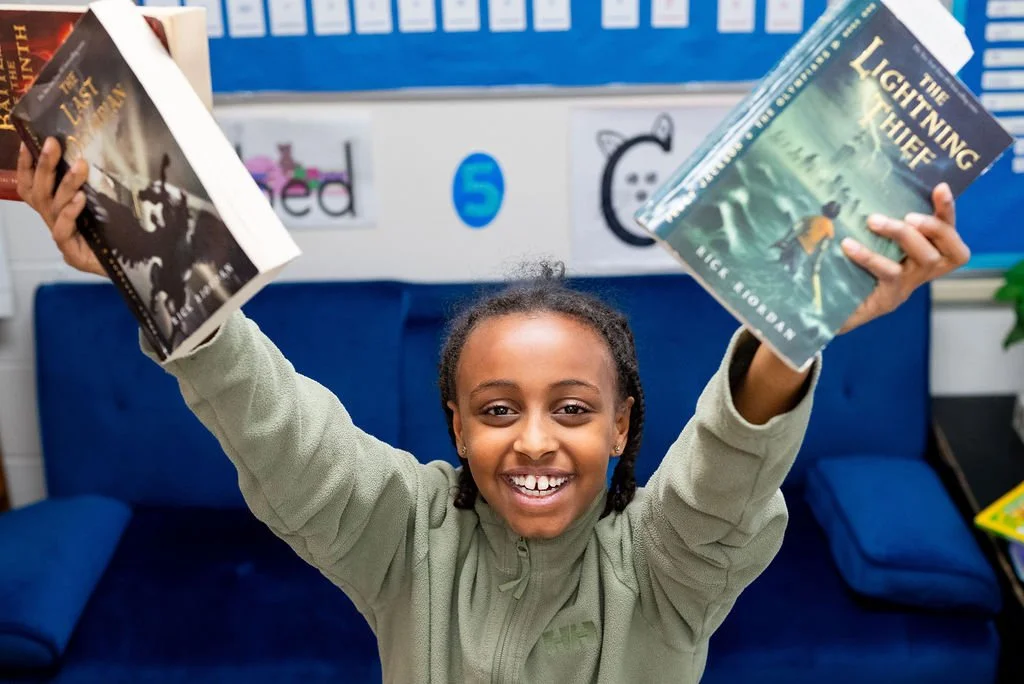
Five things you can use this week
A short read. Most parents finish it in one evening, or listen on two drives to school.
Why the interventions haven't worked yet
How to tell which strategy your child is actually doing when they read to you.
That English is 98% predictable
Seventy-five phonograms and thirty-one rules unlock almost every word in the language.
The five early indicators of dyslexia
What else should have been looked at. Speech and language needs are routinely missed.
What to stop doing at home
Why the nightly homework battle costs you more than it buys.
Whether it is too late for your child
It is not too late. But the repair work grows with every year you wait.
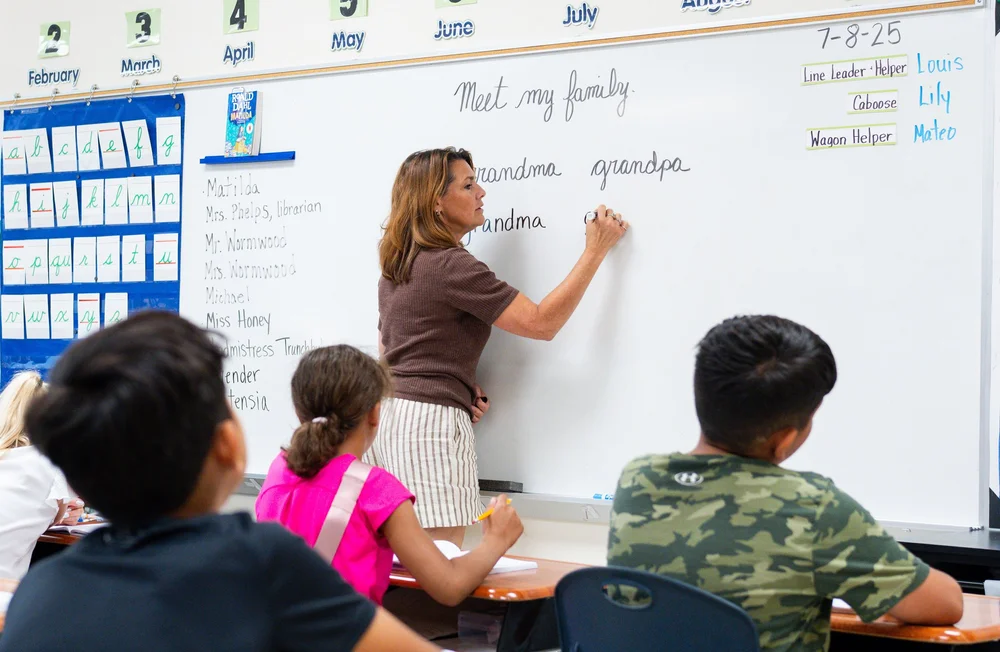
Thirty years in education. She spent the first fourteen teaching it the wrong way.
Thirty years in education. Fourteen of them in public schools, the last as a certified reading interventionist pulling the lowest-scoring 20% of students out of class every day. She was good at her job by every measure the school used, and she knew the children in front of her still could not read.
She left, taught herself the code she had never been given, and opened Feller School. This book is what she wishes someone had handed her fifteen years ago.
What readers are saying
17 five-star reviews on Amazon
Easy read as to why we are failing at teaching reading in our schools.
This book is a must for those that struggle with reading and/or dyslexia. There ARE answers and Kim does a GREAT job of explaining why we are failing so many. We have the answers. Find out what they are in this quick easy read.
A must read for parents seeking an effective learning method for their dyslexic child.
This is a must-read for parents who struggle with understanding why their bright child is showing difficulty with letters, reading, and rhyming, while excelling at other things. The book reads like Kim is actually talking to you and advising you to trust your parental instincts.
A fresh voice in dyslexia education
The author explains dyslexia in a way that is accessible, encouraging, and deeply affirming for families who may feel overwhelmed or uncertain after a diagnosis. Parents will come away with a stronger understanding of how their child's brain learns differently, and why those differences can become tremendous strengths when properly supported.
A practical guide for parents when their child learns to read
She is absolutely correct in stating that the kids are not broken, the system is. As a fellow reading teacher and specialist, I highly recommend Kim's book to any parent who is concerned about their child's progress in learning to read. She offers practical advice on how to be their child's advocate.
Amazing story
Kim Feller does a great job of illustrating the issues facing students with dyslexia, parents and teachers in public education. If you are any one of these, I suggest you read this book. Every city needs a Feller School and a dedicated teacher like Kim.
Concise and practical
As a reading specialist with 40 years of experience in literacy education, I highly recommend Kim Feller's Your Brain Loves Patterns. This easy-to-read guide empowers parents with the knowledge to ask informed questions and recognize the key elements of effective, evidence-based reading instruction for their child with dyslexia.
Do not despair, there is HOPE!
If your child struggles with reading and/or has Dyslexia, READ THIS BOOK. Frustration, classroom detachment, social ostracization, and negative behavioral concerns can all be a thing of the past through reading improvement. The approach in this book is based on contemporary brain research that leads to particular methods for learning to read that really do work.
The answer to your prayers!
I've learned dyslexic children are typically bright, creative and resourceful yet they struggle to read. Falling behind their peers in school is heartbreaking, no child should have to go through that. The greatest gift you can give, as a parent or guardian, is to locate a teacher who understands this accessible method.
Great read for ALL parents of early readers
This book is a must read for all parents of early readers, not only those concerned about dyslexia. Kim provides a compelling argument for her science-based teaching method that will benefit all children just learning to read. She also provides great questions to ask school administrators relative to their teaching methods.
Parents will find helpful information to aid their child
This book is a lifeline for parents frustrated by traditional learning methods and teachers who aren't able to help their child. It breaks down concepts into easy-to-understand nuggets of information. Kim Feller's techniques make literacy more achievable for students with dyslexia who are struggling.
An informative guide for parents
Where was this book when my kids were younger? I strongly encourage any parent who has an inkling that their child might be experiencing difficulties with reading and spelling to read this book. Kim clearly gives you, the parent, the information, understanding, and freedom to trust your gut and advocate for your child.
A pithy guide to understanding dyslexia and advocating for your child
This book is a quick and robust guide into understanding dyslexia and how to best advocate for your child. I appreciated the balance of positive, motivating messaging and practical advice coming from an expert who has dedicated their career to helping children with dyslexia become highly-skilled readers.
A must-read book
This is an important, must-read book for educators, policy makers, and parents. It concisely and clearly addresses issues at the very heart of America's literacy crisis. Kim Feller walks the talk. The results at her school are powerful.
An excellent book for parents and teachers
A hopeful and uplifting book for parents and teachers of children who struggle with reading. Kim Feller's engaging, sensitive writing hooked me immediately. Best of all, Feller provides teaching methods that just make sense. We can't assume that some children simply don't want to read.
An important book that deserves a wide readership
The opening grabbed me immediately and made me want to know more. It offers hope, kindness, love, and care to a population too often overlooked. Kim Feller is a talented storyteller with something extremely important to share, and it needs to reach a wide audience.
Wonderful guide for teachers and parents
This book belongs on the syllabus of every college professor who teaches literacy instruction. It is well researched and shows great promise in helping students who struggle with dyslexia.
Help for children with dyslexia
A must read for anyone who loves a child with dyslexia and wants them on the path to reading success.
Questions parents ask us first
Is it actually free, or is this a trial of something?
Actually free. The book sells for $14.99 on Amazon. You get the complete ebook and the complete audiobook, both yours to keep. There is nothing to buy afterwards and no card required.
My child already has an IEP. Is this still useful?
This is written for you specifically. An IEP guarantees a plan, not a method. If the method is still built on guessing, more hours of it will not help. The book shows you how to tell which kind of instruction your child is actually receiving, and gives you the questions to ask at your next meeting.
My child is nine. Is it too late?
No. Kim is direct that earlier is easier, because the brain is most plastic before about age eight, but she has watched children learn to read in third, fourth, fifth grade and beyond. What changes with age is that there is more repair to do, both to the reading habits and to how a child feels about themselves.
Do I have to live in Madison?
No. The book is useful wherever you live. The school is in Madison, Wisconsin, so the local statistics and the offer to talk in person are most relevant to Wisconsin families.
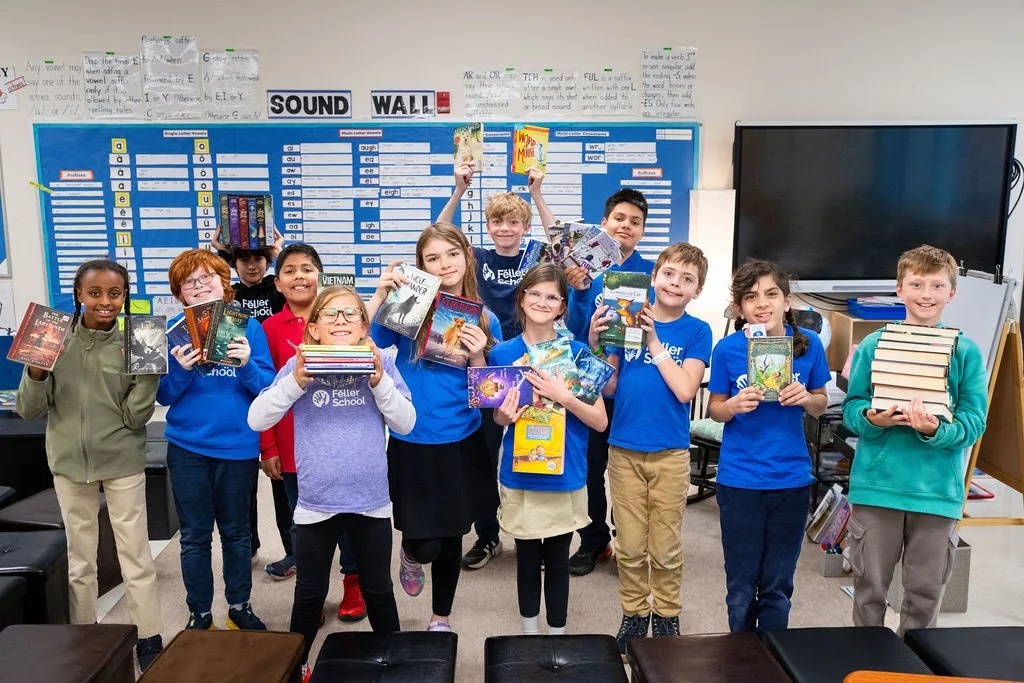
"You are smart. You are strong. You are brave. You are determined. And you can do hard things."
What every child at Feller School is told on their first day.
It's free. Tell me where to send it.
The ebook and the full audiobook land in your inbox right away. Read it tonight, or listen on the drive to school tomorrow.
Get the book for Free