
Understanding Dyslexia
Everything parents need to know about these learning differences — and what can actually be done about them.

These Are Brain Differences — Not Intelligence Differences
Dyslexia, dyscalculia, and dysgraphia are neurological differences in how the brain processes language, numbers, and written expression. They have nothing to do with intelligence, vision problems, or lack of effort.
Many people with these learning differences are exceptionally bright, creative thinkers. The disconnect isn't in their intelligence — it's in how traditional schooling delivers information.
With the right instruction, these students can and do thrive. The brain is remarkably adaptable — research consistently shows that structured, systematic teaching builds new neural pathways and transforms struggling readers into confident ones.
The Brain Is Malleable
Structured practice builds new reading and math pathways — at any age.
Early Identification Matters
Children identified early close the gap significantly faster than those who aren't.
It Runs in Families
If you struggled with reading or math in school, your child may too — genetics play a major role.
They Often Overlap
Many students have more than one of these differences at the same time — identifying all of them leads to better support.
A language-based learning difference affecting how the brain processes the sounds in spoken and written language — making reading, spelling, and writing more difficult, despite normal intelligence and adequate instruction.
Dyslexia means seeing letters backwards.
Dyslexia is a language processing difference, not a vision problem. Letter reversals are common in young kids regardless of dyslexia.
Children will grow out of it if you give them more time.
Dyslexia doesn't go away on its own — but with the right instruction, students make dramatic, lasting progress.
Dyslexia means low intelligence.
Dyslexia affects people across all intelligence levels. Many people with dyslexia have above-average IQs and exceptional creative abilities.
Dyslexia is not a barrier to success. It's a different way of processing the world — and with the right tools and instruction, these students don't just catch up. They often surpass.
A specific learning difference that affects how the brain processes numbers and mathematical concepts — making arithmetic, understanding quantity, and math reasoning persistently difficult, regardless of intelligence or instruction quality.
They just need to practice more math facts.
Drilling doesn't fix dyscalculia. Students need instruction that builds number sense from the ground up using concrete, visual methods.
Dyscalculia is just being "bad at math."
Dyscalculia is a neurological difference — not laziness. Brain scans show different activation patterns when processing numbers.
It's much rarer than dyslexia.
Dyscalculia affects roughly 5–7% of school-age children — nearly as common as dyslexia, but far less talked about or diagnosed.
With systematic, concrete instruction — like the Math-U-See approach used at Feller School — students with dyscalculia build genuine understanding, not just memorized procedures. Math becomes something they can reason through.
A specific learning difference that affects written expression — including handwriting, spelling, and the physical act of putting thoughts on paper. Students with dysgraphia often have rich ideas and strong verbal skills, but struggle to express them in writing.
They're just lazy or not trying hard enough.
Writing requires enormous cognitive effort for students with dysgraphia. What looks effortless to others can be exhausting and painful for them.
Just giving them a keyboard solves the problem.
While technology helps, systematic handwriting instruction — like cursive — builds neural pathways that improve writing for many students.
Dysgraphia only affects handwriting neatness.
Dysgraphia affects the entire writing process — organizing thoughts, spelling, grammar, and the physical act of writing all at once.
At Feller School, we use the Rhythm of Handwriting method and Logic of English® to teach writing as a systematic, learnable skill. Students who once hated writing often discover they have a lot to say.

Feller School Was Built for These Kids
Every program, every teacher, and every minute of every school day is designed around how students with dyslexia, dyscalculia, and dysgraphia actually learn.
Logic of English® Curriculum
We teach the 75 phonograms and 31 spelling rules governing 98% of English words — so students decode any word, not just ones they've memorized.
Math-U-See for Dyscalculia
Concrete, visual, multi-sensory math instruction that builds real number sense — not rote memorization that falls apart under pressure.
Rhythm of Handwriting
Systematic cursive instruction that builds the motor memory and neural connections supporting both writing and reading — for students with dysgraphia and beyond.
The Same Child. A Completely Different Story.
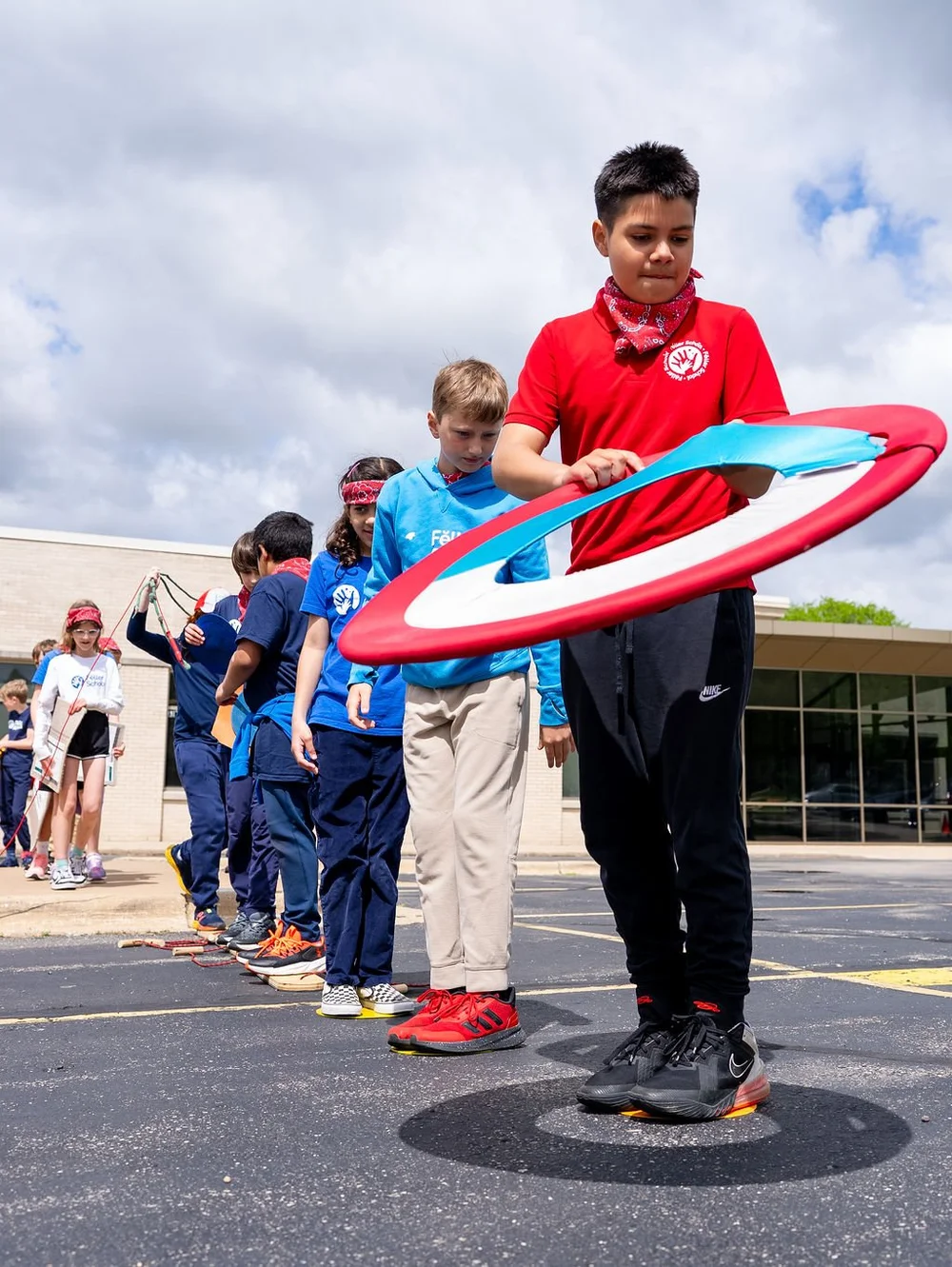
The kids who walk through Feller School's doors are often exhausted. They've spent years working twice as hard as everyone else, convinced they're the problem — when the method was always the problem.
What changes isn't the child. Their intelligence was never in question. What changes is the instruction — and with the right instruction, everything else follows. Confidence. Reading fluency. A willingness to try again.
That's what we're here to do.
1 in 5 Families Are Walking This Same Path
Dyslexia, dyscalculia, and dysgraphia run in families. If you struggled with reading or math in school, there's a real chance your child is facing the same challenges — and that the school system is missing it, just like it missed it for you.
Identifying it early is the single most powerful thing you can do. Students who get the right intervention before third grade close the gap dramatically faster than those who wait.


Take Our Free Dyslexia Screener
Our free online screener takes about 5 minutes and gives you a clearer picture of whether your child is showing signs of dyslexia. It's not a diagnosis — but it's a powerful first step toward getting the right answers.
Take the Free Screener →